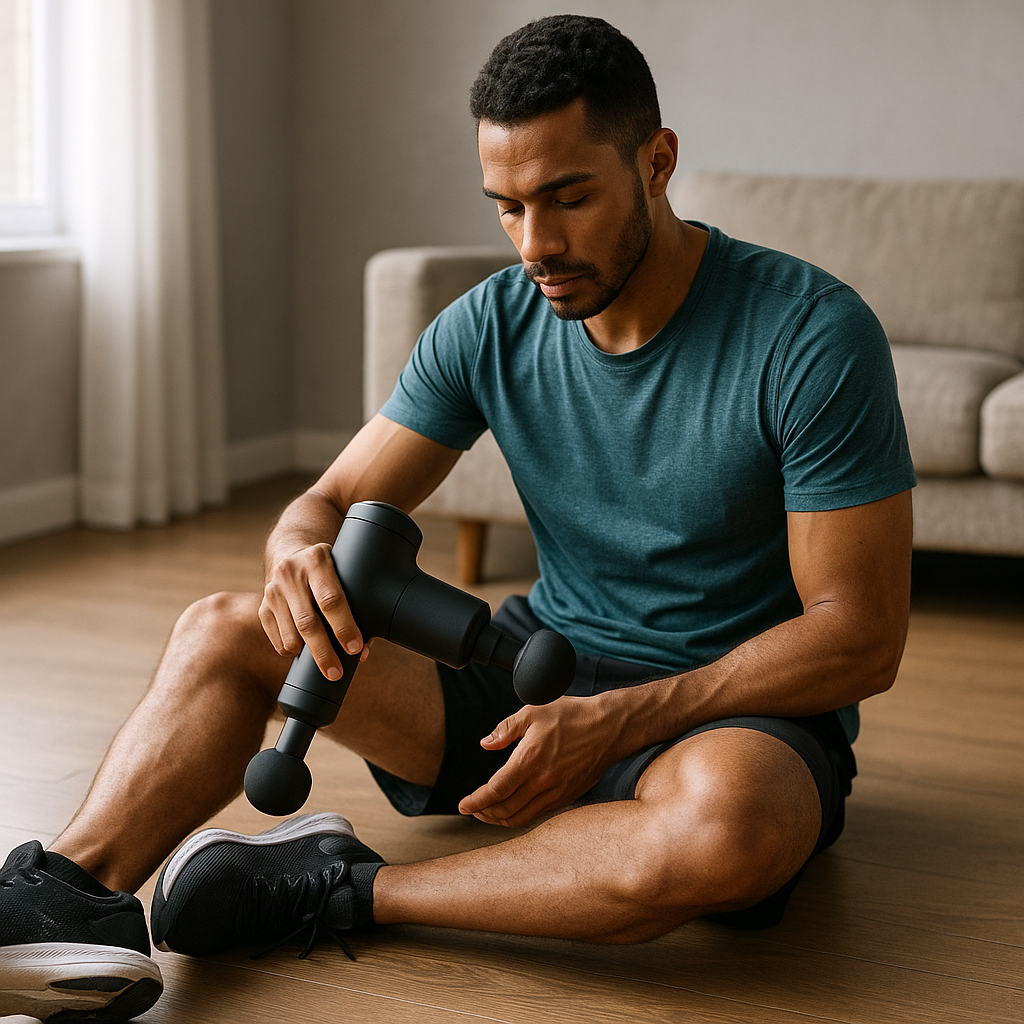
Top 10 Massage Guns to Speed Recovery and Improve Post-Run Comfort
Quick Summary
- Massage guns (percussion devices) help loosen tight muscles, reduce soreness, and improve circulation when used correctly.
- Choose a device based on amplitude, stall force, battery life, weight, and noise level for your needs and budget.
- Short pre-run use (30–60 seconds per muscle) and longer post-run sessions (1–3 minutes per muscle) are commonly recommended.
- Don’t use a massage gun on acute injuries, open wounds, bruises, or directly over bones and joints—consult a healthcare professional when in doubt.
Introduction
A quick percussion massage before or after a long run can make a surprising difference in mobility, perceived soreness, and how quickly you recover. Massage guns — portable, battery-powered devices that deliver rapid pulses to soft tissue — are now common in gyms, training bags, and living rooms. This guide reviews ten top models across price points and use cases, explains how to use them safely and effectively, and offers practical steps and a checklist so you can pick and use the right tool for your routine.
How to Pick a Massage Gun: Key Features to Compare
- Amplitude (stroke length): Determines how deep the device reaches. 10–16 mm is typical; deeper strokes affect deeper muscle layers.
- Stall force (pressure tolerance): Higher stall force means the head won’t slow down as you press into a tight area.
- Speed/settings: Multiple speed settings let you customize intensity — low for warm-up, higher for deep recovery.
- Battery life: Long battery life is helpful for travel or long training sessions.
- Attachments: Different heads are better for large muscle groups, trigger points, and sensitive areas.
- Weight and ergonomics: Lighter, well-balanced guns are easier to hold for extended use.
- Noise level: If you’ll use it at home or in a gym, noise can matter.
Top 10 Massage Guns for Workout Recovery
These selections balance power, feel, battery life, and value. Models are presented broadly from premium to budget-friendly and with notes on who they suit best.
1. Theragun PRO
Why it stands out: Industry-leading percussive depth and build quality with a range of attachments and adjustable arm positions. Best for serious athletes and therapists who need strong stall force and long runtime.
Good for: Deep tissue work and heavy training loads. Pros: very powerful, ergonomic. Cons: expensive, heavier than some alternatives.
2. Theragun Prime
Why it stands out: Offers Theragun’s signature feel at a lower price point with quieter motor and solid battery life.
Good for: Runners and regular exercisers who want Theragun performance without the PRO price. Pros: consistent percussive action, app integration. Cons: still pricier than many competitors.
3. Hypervolt 2 Pro
Why it stands out: High stall force and smooth, quiet motor; often praised for its commercial-grade feel.
Good for: Gym use and people who want a powerful but quiet device. Pros: durable, effective. Cons: price can be high for casual users.
4. Hypervolt Go 2 (travel)
Why it stands out: Compact and lightweight for runners who travel. Decent battery life and quieter operation.
Good for: Travelers and lightweight carry. Pros: portable, effective for maintenance. Cons: less powerful than full-size models.
5. Ekrin Bantam (B37)
Why it stands out: Strong performance, ergonomic handle, and mid-range pricing; often a good balance of value and power.
Good for: Everyday users who want power and comfort. Pros: intuitive grip, solid battery life. Cons: fewer attachments than premium brands.
6. Opove M3 Pro
Why it stands out: Good amplitude and power with a user-friendly design at a reasonable price.
Good for: Those seeking a strong performer without premium pricing. Pros: durable, effective. Cons: slightly louder at high settings.
7. Achedaway Pro
Why it stands out: Known for high stall force and long battery life; often used by cross-training athletes.
Good for: Heavy training loads and longer sessions. Pros: reliable for tough knots. Cons: bulkier than travel designs.
8. TimTam Power Massager Pro
Why it stands out: Delivers deep percussion with rapid strokes; favored for aggressive soft-tissue work.
Good for: Athletes and manual therapists who prefer a punchier feel. Pros: intense impact. Cons: can be harsh if used too aggressively.
9. Renpho R4 Pro
Why it stands out: Budget-friendly with multiple speed settings and attachments. Good entry-level option for new users.
Good for: Casual exercisers and those new to percussion therapy. Pros: affordable, lightweight. Cons: less power and shorter battery life.
10. LifePro ApexPro
Why it stands out: Offers a range of attachments and modes at a mid-budget price. Good all-around choice for general recovery.
Good for: Families or shared household use. Pros: value for money. Cons: not as deep as premium devices.
How to Use a Massage Gun: Practical Steps
- Read the manual and start on the lowest setting to gauge comfort.
- Warm-up option: Use 30–60 seconds on large muscle groups (quads, glutes, calves) at a low setting to increase blood flow before a run.
- Post-run recovery: Spend 1–3 minutes per muscle group at a comfortable intensity. Move the head slowly — do not linger directly on pain or bony prominences.
- Focus on muscle belly and away from tendons/joints. For trigger points, use shorter, controlled bursts rather than long, aggressive pressure.
- Finish with gentle stretching or mobility work to consolidate gains in range of motion.
- If you have an existing injury or chronic condition, consult a physiotherapist or doctor before use.
Practical Checklist Before Buying/Using
- Purpose: pre-run warm-up, post-run recovery, or therapy-level work?
- Test weight and grip in-store if possible — can you hold it comfortably?
- Check battery life and charging options (USB vs. proprietary charger).
- Look for a range of attachments and speed settings.
- Read warranty details and return policy.
- Plan to clean attachments and wipe down the device regularly.
Common Mistakes
- Using excessive pressure: pressing too hard reduces percussion speed and can aggravate tissue.
- Overusing the gun: long sessions or frequent use on the same spot can cause irritation.
- Targeting bones and joints directly — stick to muscle bellies and avoid fragile areas.
- Relying solely on a massage gun: combine with stretching, strengthening, sleep, and nutrition for true recovery.
- Not cleaning attachments — bacteria and sweat buildup can create hygiene issues.
Where Massage Guns Fit in a Runner’s Toolkit
Massage guns are a convenient tool for runners to improve circulation, ease tightness, and complement mobility work. They aren’t a cure-all — pair them with sensible strength work, sleep, and pacing. If you’re building a routine, consider integrating targeted strength sessions like the 30-minute options found in this strength plan, or tailoring your recovery to your phase of training with resources on shifting from base to specific training and choosing the right strength plan for running. For gear and race prep, explore a custom running toolkit and practical additions like the best running belt.
Conclusion
Massage guns can be a valuable addition to pre- and post-run routines when chosen and used thoughtfully. Evaluate amplitude, stall force, battery life, weight, and attachments against your goals and budget. Use short, controlled sessions, avoid bones and injured areas, and combine percussion therapy with stretching, strength training, sleep, and proper nutrition. When in doubt about pain or injury, consult a healthcare professional.
FAQ
Q1: How long should I use a massage gun on one spot?
A: Keep sessions brief — typically 30–60 seconds per spot for pre-run warm-up and 1–3 minutes per muscle group for post-run recovery. Longer bursts can irritate tissue.
Q2: Can massage guns treat injuries like strains or tendonitis?
A: Massage guns may help with muscle tightness and circulation but are not a replacement for medical care. Avoid using them on acute injuries or inflamed tendons without professional guidance.
Q3: Are more speed settings better?
A: Not always. A few well-spaced speeds that cover low-to-high intensity are usually sufficient. More important are amplitude and stall force for depth and pressure tolerance.
Q4: Is a quieter gun worth the premium?
A: If you’ll use the device at home, in the office, or early/late, a quieter motor improves comfort and discretion. Many premium models focus on reducing noise while maintaining power.
Q5: Which attachments should I use for running-related recovery?
A: Use large round heads for quads, hamstrings, and glutes; bullet or cone heads for trigger points; and flat or fork heads for calves and around the Achilles (avoid direct pressure on the tendon). Always start gentle and increase intensity gradually.
Part of the Complete Strength Training Guide
Explore more: Recovery, Mobility & Injury Prevention













Post Comment