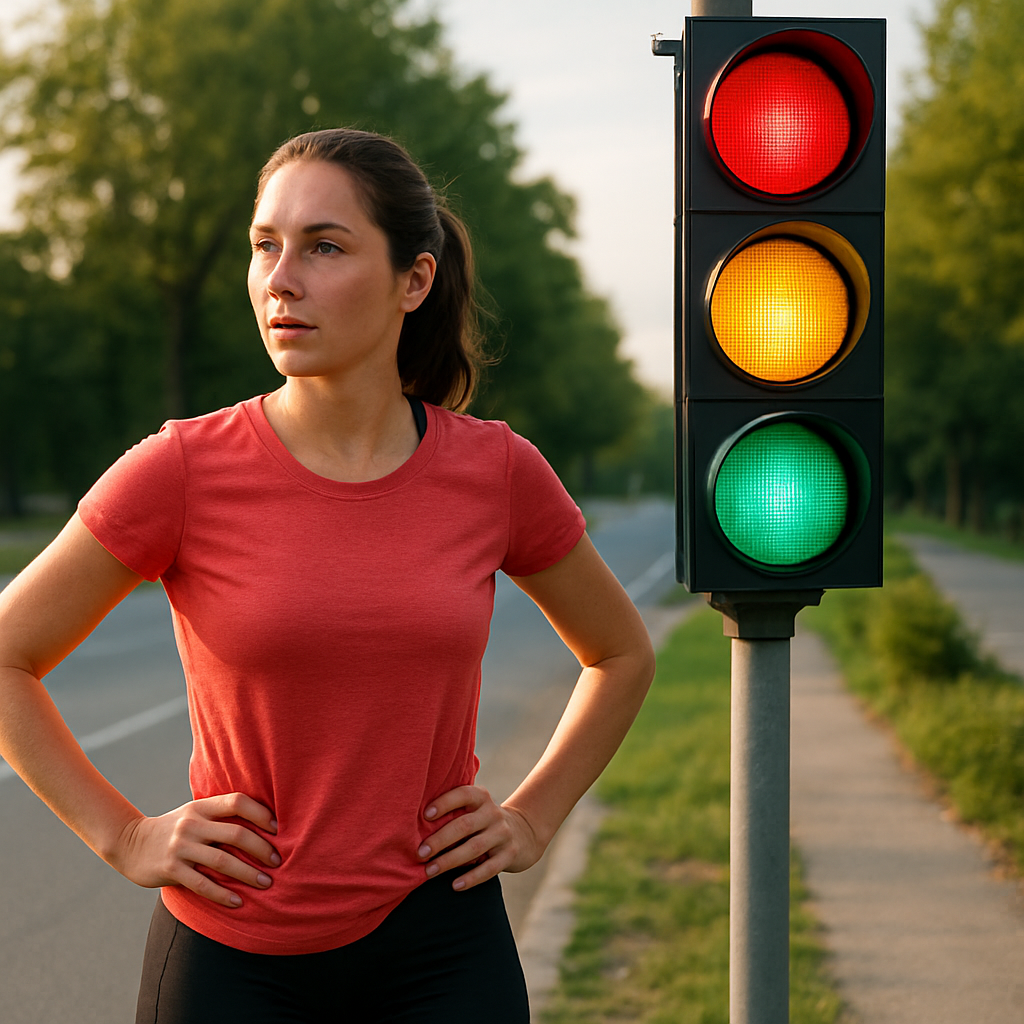
How Three Colors Shape My Run: Turning Stops into Wins
We all have little rituals that determine whether a run feels like a victory lap or a chore. For me, it’s less about distance or pace and more about three colors I see before and during a run: green, yellow and red. They show up as traffic lights, trail markers, or mental signals—and each one changes my mood and my choices. Learning to interpret and respond to them has made my runs calmer, smarter and more enjoyable.
Quick Summary
- Three colors—green (go), yellow (caution/adjust), red (stop)—act as useful cues for pacing, safety and mindset during a run.
- Turn forced stops (red lights, intersections) into productive moments: mobility, breath, gratitude, small drills.
- Use yellow moments to reassess effort and environment; use green to commit with confidence.
- Practical steps and a simple checklist help make these color cues part of consistent, resilient training.
Why colors matter more than you think
The colored cues we encounter while out running are often literal—traffic signals, trail blazes—or figurative—your watch’s heart-rate zones or a coach’s warning. But they also map to emotional states. Green feels liberating, yellow triggers a small anxiety or decision, and red can feel like defeat when it forces you to stop. When you learn to treat each color as information rather than judgement, you convert inconvenience into opportunity.
Green: The permission to trust
Green moments are when the path is clear, your legs feel light and you decide to push or settle into a rhythm. They’re great for building momentum and confidence. On unfamiliar trails you might associate green with a clear line of sight; in city running it’s a long traffic signal or empty crosswalk. When you respect green moments, you get better at using them strategically—tempo effort, surges, or relishing an easy stride.
Yellow: The moment to adjust
Yellow isn’t a failure—it’s a prompt. It asks you to reassess pace, terrain, breathing and attention. In practice, yellow is perfect for small calibrations: slow your turnover, check your posture, sip water, or anticipate an obstacle. The better you become at making tiny corrections, the fewer red stops you’ll encounter.
Red: The forced pause that can improve your run
Red lights, crowded trail junctions, or a sudden cramp force a halt. Rather than seeing red as a mood killer, treat it as a mini recovery station. A 20–60 second deliberate pause can reset breath, loosen tight hips, and refocus your mental energy. If you reframe stops as intentional micro-recovers, they lose their sting and often improve the rest of your workout.
Practical steps: Make stops work for you
Below are specific actions you can do when you encounter each color cue. They’re quick, require no equipment, and easily slot into any run.
If you see green
- Commit. Decide whether this is a push or a steady pace and stick to it for the next 1–5 minutes.
- Check mechanics: quick posture scan—tall spine, relaxed shoulders, engaged core.
- Run a short drill (20–30 seconds): high knees or quick turnover to prime neurologic speed if you plan to surge.
If you see yellow
- Slow turnover slightly and lengthen your exhale for 3–6 breaths to stabilize heart rate.
- Scan the terrain and environment: loose gravel, traffic, dogs, or other hazards.
- Take a small sip of water or a gel if you’re planning a long effort.
If you see red
- Use 20–60 seconds for a deliberate reset: diaphragmatic breathing, ankle circles, or hip swings.
- Do one short activation: 10 glute squeezes, core bracing, or a few single-leg balances to re-engage form.
- Practice a gratitude cue—notice one pleasant thing around you to banish frustration.
Training applications: intervals, tempo and recovery
These color-driven micro-habits translate directly into training structure. For intervals, treat green as the work interval and red as a productive recovery. For tempo runs, use yellow as a watch-check point to make sure you’re holding effort, and if you must stop, use that red pause to simulate race aid stations (short, efficient pauses).
If you’re new to structured running, consider stability-focused footwear to reduce the risk of overuse when you change pace often—useful options are discussed in this guide to best stability running shoes. For trail outings where color cues might be trail blazes and roots, see suggestions in this trail running shoes guide. For everyday walks and easy runs, comfortable supportive shoes matter—this comfort and support walking shoes resource is helpful.
Checklist: Before and during your run
- Pre-run: Quick mobility (ankles, hips, thoracic), 3–5 easy minutes warm-up.
- Gear: Shoes appropriate for surface and stability, light reflective clothing if needed, phone/ID and small hydration.
- Mental: One intention (e.g., “steady tempo” or “easy recovery”) and two cues (“breathe 3:3,” “tall posture”).
- During run: When you hit green—commit; yellow—calibrate; red—reset and do a 20–60s activation.
- After run: Gentle cooldown, brief stretching, and note one win from today’s run.
Common Mistakes
- Treating a red light as failure—this turns useful pauses into negative feedback loops.
- Rushing immediately after a stop—sudden surges after a pause increase injury risk and breathlessness.
- Ignoring small yellow signals (tightness, rising breath)—they usually precede bigger problems.
- Relying entirely on tech—watches can distract you from sensory cues like footing or traffic.
- Wearing the wrong shoes for your terrain or run type—poor footwear increases fatigue and mistakes. See resources on stability and trail shoes above.
Why this habit matters long-term
Simple cognitive reframing—viewing stops as strategic instead of punitive—changes your emotional tone on runs. That shift reduces stress, keeps training consistent, and even improves adherence to exercise long term. Regular aerobic activity is linked to cognitive and cardiovascular benefits across midlife and beyond; for more on how cardio helps brain age and cognition, this article explores recent findings: Does cardio slow brain aging? Remember: if you have health concerns, consult a physician before starting or changing your exercise routine.
Conclusion
Green, yellow and red are more than traffic signals—they’re practical cues for how you run, think and recover. When you adopt three simple habits—commit on green, calibrate on yellow, and use red as a productive pause—you’ll find your runs feel less interrupted and more intentional. Start small: pick one cue this week, practice the associated action, and notice how your mood and momentum shift.
Practical Steps Summary
- Pick a single cue to practice (e.g., 30s reset at every red light) for one week.
- Before each run set one clear intention and two quick cues (breath and posture).
- Use yellow moments to drink, scan, and slightly downshift effort instead of panicking.
- At green, commit to a short window (1–5 minutes) of steady effort to build confidence.
- Log one win after each run—no matter how small.
FAQ
1. Should I stop my watch or pause intervals every time I hit a red light?
Not necessarily. If you’re training to simulate race conditions where stops occur (aid stations, traffic), let the watch keep time and use the pause for quick resets. If you’re focused on time-under-tension for intervals, pause only when needed. Choose a consistent rule so you can track progress.
2. How long should I use a red-light reset for?
Most effective resets are short—20–60 seconds. Enough for a few deep diaphragmatic breaths, a mobility rep, and a single activation sequence. Any longer and you risk cooling down too much for a hard effort.
3. Are frequent stops bad for endurance training?
No—if managed well, frequent short pauses can improve pacing, reduce perceived exertion, and teach you to resume efficiently. They’re only counterproductive if they become emotional setbacks or cause poor biomechanics when you restart.
4. What should I do if stopping makes me stiff and sore?
Use your reset time for dynamic mobility rather than standing still. Ankle rolls, hip swings, short lunges or leg swings keep tissues warm and reduce stiffness when you start again. If stiffness persists, consult a physical therapist or coach.
5. How can I train my brain to react positively to yellow or red signals?
Practice deliberate reframing: every stop, name one small productive action (breathe, mobilize, check form). Track consistency for a few weeks—positive habits are built by repetition. For personalized guidance on training plans or injury prevention, seek a qualified coach or clinician.
Part of the Complete Strength Training Guide
Explore more: Endurance & Running Training Hub














Post Comment