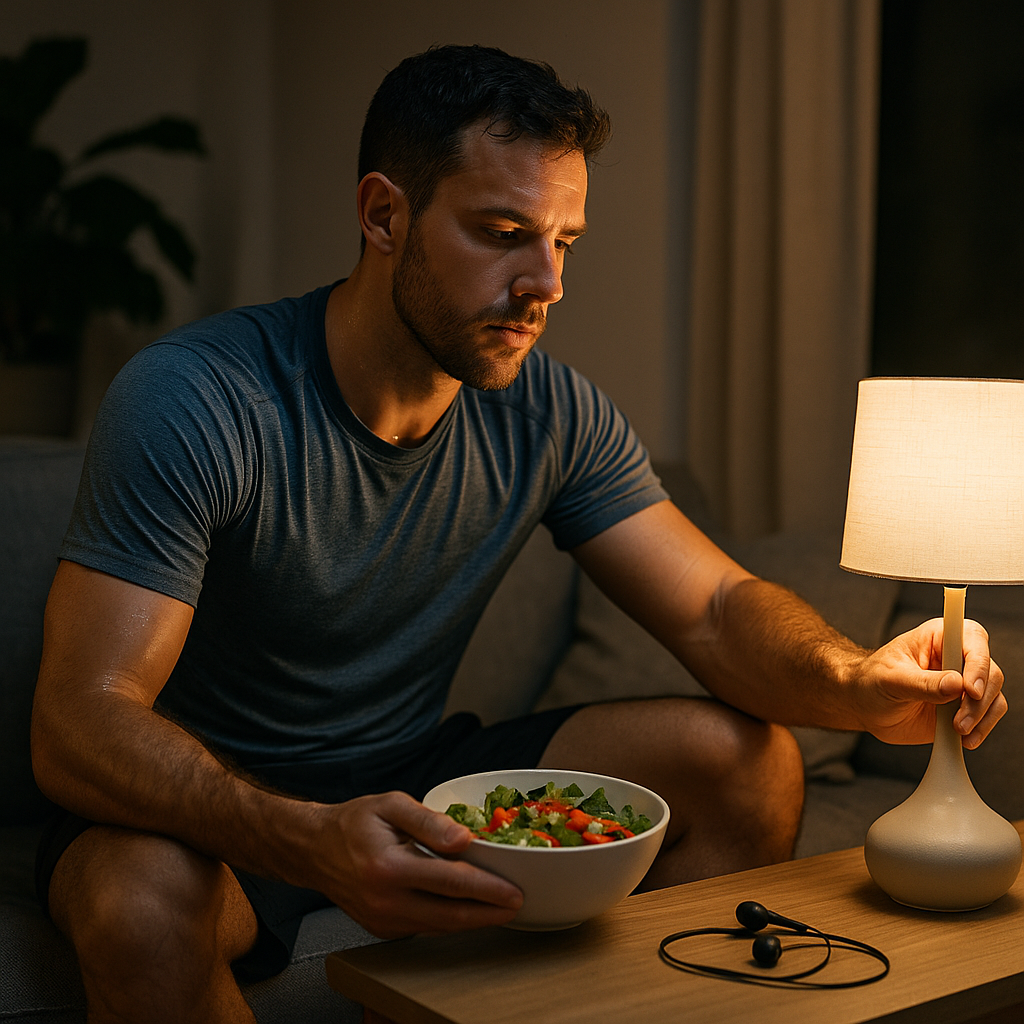
Shift Your Evening: How Stopping Late-Night Eating and Dimming Lights May Help Your Heart
Small changes to when and how you wind down each evening may give your cardiovascular system a measurable boost. Emerging research suggests that timing your last meal earlier and reducing evening light exposure — without cutting calories — can improve blood pressure, resting heart rate, and blood-sugar control. Below is a practical guide to what the findings mean and how to try this approach safely.
Quick Summary
- Stopping eating about three hours before bed and dimming lights in the evening extended the overnight fast by roughly two hours.
- Participants in the study experienced modest improvements in blood pressure, heart rate, and blood-sugar regulation without calorie restriction.
- The benefits likely stem from aligning meals and light exposure with your body’s internal clock (circadian rhythms).
- This is a lifestyle strategy, not a replacement for medical treatment; consult your healthcare provider if you have chronic conditions like diabetes or heart disease.
Why meal timing and light exposure matter
Your body runs on a circadian rhythm — a roughly 24-hour daily cycle that coordinates sleep, hormones, metabolism, and cardiovascular function. When you eat and when you are exposed to bright light both act as cues (zeitgebers) that help set that clock. Eating late at night and bright artificial light in the evening can shift or desynchronize internal rhythms. That mismatch can negatively affect glucose metabolism, blood pressure regulation, and autonomic balance (resting heart rate).
How the recent findings fit into the bigger picture
The study showed that simply restricting food intake so the last meal was about three hours before bedtime, combined with dimming evening lights, increased the overnight fasting window by about two hours. Participants saw measurable improvements in markers linked to cardiovascular risk — notably lower nighttime blood pressure, reduced resting heart rate, and better postprandial blood-sugar handling — all without reducing total calories.
These outcomes are consistent with broader research showing that aligning behaviors with internal clocks supports metabolic and cardiovascular health. Small changes in daily blood pressure and heart rate, if sustained over time, may reduce long-term risk.
Who might benefit — and who should be cautious
Potentially helpful for: adults aiming to lower cardiovascular risk through lifestyle changes, people with elevated blood pressure or prediabetes seeking non-pharmacologic strategies, and anyone wanting better sleep and metabolic stability.
Use caution and consult a clinician if you have:
- Type 1 diabetes, insulin-treated type 2 diabetes, or frequent hypoglycemia — altering meal timing can affect blood sugar control.
- Pregnancy, eating disorders, or significant health conditions that require specific meal schedules.
- Medications that must be taken with food at certain times — discuss adjustments with your prescriber. (For context about medication conversations, see information on statin side effects and how medication decisions are weighed.)
Practical steps to try evening fasting and light dimming
These are simple, sustainable steps you can trial for 2–4 weeks to see if you notice improvements in sleep, energy, or measurable markers like morning blood pressure or fasting glucose.
Step-by-step plan
- Pick a target bedtime and plan to stop eating 3 hours before that time. For example, if you go to bed at 11:00 p.m., finish eating by 8:00 p.m.
- Dim indoor lights starting about 2–3 hours before bed. Use lower-watt bulbs, warm light settings on lamps, or enable blue-light filters on screens.
- Keep hydrated with water or herbal tea in the evening, but avoid caloric snacks and beverages after your cutoff time.
- Maintain your usual calorie intake during the day; move larger meals earlier rather than simply skipping them.
- Monitor how you feel and track basic metrics: morning blood pressure, resting heart rate, fasting glucose (if you check), and sleep quality.
Checklist
- Choose a consistent bedtime and eating cutoff time (3 hours before bed).
- Shift main meals earlier in the day when possible.
- Dim lights and reduce screen time 2–3 hours before bed.
- Keep evening beverages non-caloric.
- Track morning blood pressure and sleep for 2–4 weeks to judge effects.
- Consult your healthcare provider if you take medications that require food, have diabetes, or other chronic conditions.
Common mistakes and how to avoid them
- Waiting until late to eat a large, heavy dinner. Solution: shift the largest meal earlier and opt for lighter evening options if needed.
- Relying on screens while claiming to dim lights. Solution: reduce screen time or use blue-light filters and keep ambient lighting low.
- Cutting calories unintentionally. Solution: aim to keep your daily energy intake stable, just redistribute when you eat.
- Ignoring medical needs. Solution: people on glucose-lowering medications or with other conditions should consult their clinician before changing meal timing.
- Expecting overnight miracles. Solution: allow several weeks to detect meaningful changes in blood pressure or metabolic markers.
How to measure whether this is working for you
Simple home monitoring and an honest log can show whether the change makes a difference:
- Record morning blood pressure and resting heart rate (same time each morning).
- Note fasting or morning blood-glucose levels if you check them.
- Track sleep duration and subjective sleep quality.
- Keep a brief food/timing diary to ensure you’re not compensating with more late-day calories.
If you want additional screening for heart risk, new tools that detect early microvascular changes may be useful; research into portable scans for early heart risk is ongoing and can help guide professional conversations.
Other lifestyle complements
- Reduce dietary sodium to help blood pressure — even small reductions can have benefits over time.
- Regular physical activity and weight management support cardiovascular health.
- Avoid late-night alcohol, which can disrupt sleep and circadian regulation.
- Be cautious with extreme diets; some long-term metabolic studies raise concerns about unsupervised restrictive approaches.
When to talk to a health professional
Contact your clinician before trying this strategy if you have diabetes, take medications that require food, have a history of eating disorders, are pregnant, or have cardiovascular disease. If home monitoring shows worsening blood glucose or concerning blood-pressure readings, seek medical advice promptly.
Conclusion
Shifting your last meal earlier and dimming lights in the evening is a low-cost, low-risk habit you can test for a few weeks. Evidence suggests it may improve markers tied to heart health without cutting calories, likely by better aligning your behavior with circadian biology. Use straightforward tracking to assess whether it helps you, and consult a health professional if you have medical conditions or take medications that could be affected.
FAQ
Q1: Will simply stopping food three hours before bed guarantee lower blood pressure?
A1: No guarantee. The study shows modest improvements on average, but individual responses vary. It’s one lifestyle tool that may help alongside other interventions like reducing sodium and increasing activity. For more on sodium and blood pressure, see small salt cuts save lives.
Q2: Can people with diabetes try this approach?
A2: People with diabetes—especially those on insulin or other glucose-lowering medications—should consult their clinician before altering meal timing, because changes can affect blood-glucose control and medication needs.
Q3: Do I have to dim lights too, or is stopping eating enough?
A3: The study combined earlier eating with dimmed evening light exposure. Both cues influence circadian timing, so using both may yield better results than meal timing alone.
Q4: How long before I should expect to see benefits?
A4: Some people notice improved sleep or morning blood pressure within a couple of weeks, but meaningful metabolic changes may take several weeks to months. Track results for at least 2–4 weeks to judge impact.
Q5: Does this replace medications for heart disease or high blood pressure?
A5: No. Lifestyle changes can complement medications but are not a substitute. If you have a heart condition or high blood pressure, follow your clinician’s treatment plan and discuss any lifestyle adjustments with them. For context about medication decisions, you may want to read about statin side effects and considerations.
For readers interested in related topics, you may find research on long-term metabolic risks of extreme diets and early vascular screening useful: keto long-term metabolic risks and portable scans for early heart risk. If you’re focused on blood pressure, see guidance on subtle sodium reductions: small salt cuts save lives.
Remember: this guidance is educational and not medical advice. Talk with your healthcare provider about whether evening fasting or changes in light exposure are appropriate for you.
Part of the Complete Strength Training Guide
Explore more: Endurance & Running Training Hub














2 comments