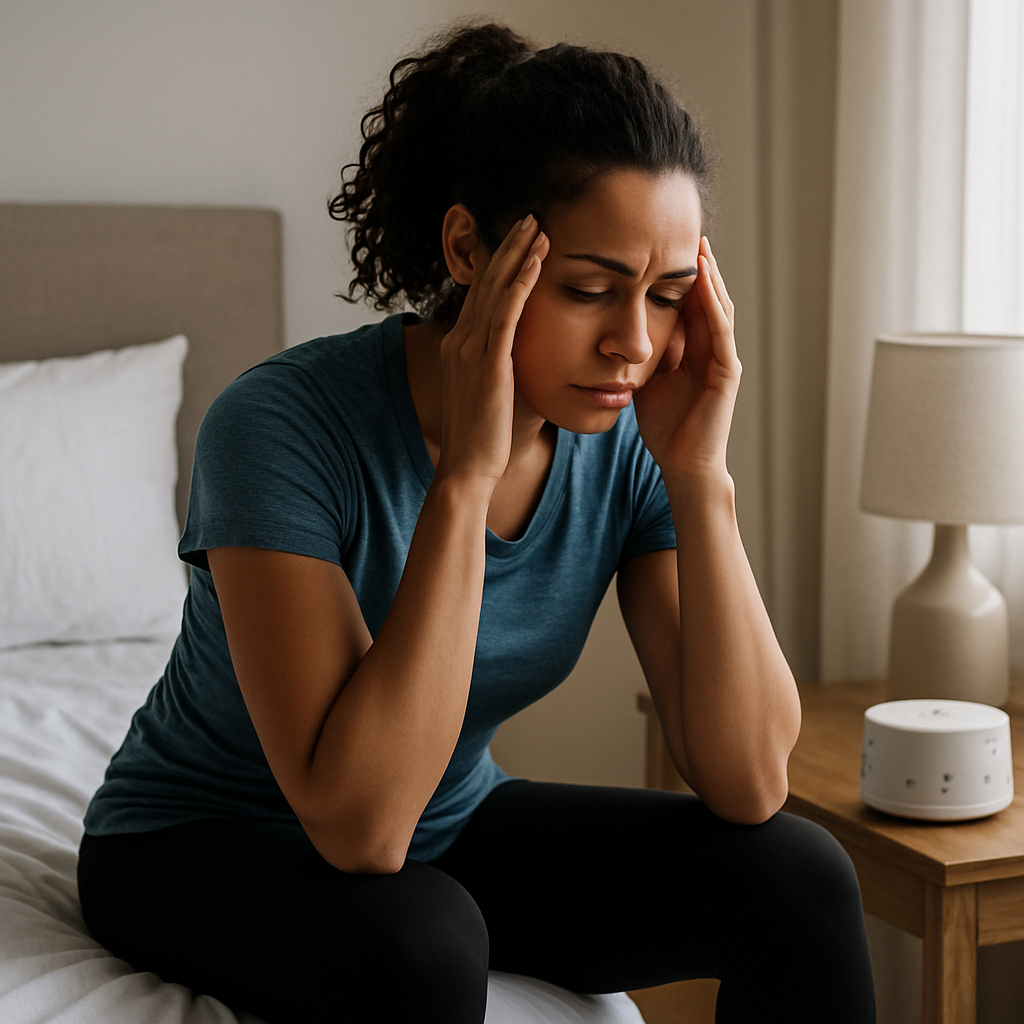
When Sleep Sounds Backfire: How Noise Machines Can Hurt Sleep and What to Do Instead
Many people turn to sound machines, apps, or playlists to drown out city traffic, snoring partners, or the general hum of life at night. The promise is simple: steady background sound helps you fall asleep and stay asleep. But emerging research suggests that some popular options—especially pink-noise generators—may do more harm than good for certain aspects of sleep, and could be particularly problematic for children.
Quick Summary
- Some research shows pink noise can reduce REM sleep, an important stage for memory and emotional processing.
- Simple earplugs often protect deep, restorative sleep (N3) from traffic noise better than pink-noise machines.
- Combining pink noise with outside noise can worsen overall sleep quality compared with either alone.
- Kids may be more sensitive to sound-induced changes in sleep architecture; consult a pediatrician before regular use.
- There are practical alternatives and ways to use sound safely—volume, timing, sound type, and testing matter.
How people use sound to sleep — and why it seemed like a good idea
White, pink, and brown noise, nature sounds, and ambient playlists are meant to mask sudden environmental noises and provide a consistent auditory backdrop. Many people who struggle with intermittent noise—traffic, barking, or household activity—report faster sleep onset and fewer awakenings when using a sound source. For those with shift work or irregular sleep schedules, masking sounds can help create a predictable cue that supports falling asleep.
What recent findings add to the picture
While masking sudden noises can help some sleepers, controlled studies indicate a more complex relationship between background sound and sleep architecture (the sequence of sleep stages that includes light sleep, deep sleep, and REM sleep). Key points reported by researchers include:
- Pink noise—sound that emphasizes lower frequencies and is often perceived as “soothing”—has been linked to reductions in REM sleep in some experiments.
- Simple earplugs can better protect deep slow-wave sleep (N3), particularly against intermittent traffic noise, compared with playing pink noise.
- When pink noise was combined with real-world outside noise, overall sleep quality decreased more than with either sound alone in some studies.
REM sleep is important for emotional regulation and memory consolidation, while deep sleep is critical for physical restoration and certain forms of memory. Disturbing the balance of these stages may have daytime consequences even if total time in bed looks normal.
Why pink noise might reduce REM
Pink noise contains more low-frequency energy than white noise and presents a smoother, less abrupt sound profile. That can be calming, but it also occupies auditory processing continuously in a frequency band that the brain uses to monitor the environment. REM sleep is a lighter, more active state in terms of brain processing than deep slow-wave sleep. Continuous auditory input in specific bands may subtly alter the brain’s progression into REM or the duration of REM episodes. When external noises are added on top of pink noise, the brain’s ability to maintain stable sleep stages can be further disrupted.
Why children might be more affected
Children’s brains are developing and have different balances of sleep stages compared with adults. They tend to have proportionally more deep sleep and different REM patterns. Repeated alterations to sleep architecture during key developmental windows could theoretically influence learning, mood regulation, and growth-related processes. This is why a cautious approach is recommended for infants and young children—especially long-term nightly use of continuous background sound.
Practical steps to protect sleep while using sound
If you rely on a sound machine or app, follow these practical steps to minimize harm and maximize benefits:
- Volume matters: Keep the sound at a low, comfortable level. Aim for a level where you can still hear normal speech but it’s distant—generally below 50 dB for adults; children should be kept even lower. If in doubt, reduce volume.
- Prefer masking over layering: If outside noise is the problem, try earplugs or soundproofing first. If you use a machine, test whether it improves or worsens sleep by comparing nights with and without it.
- Choose sound type carefully: White noise is flatter in frequency content, brown noise emphasizes lower frequencies more than white, and pink sits between them. Some evidence suggests pink noise may interfere with REM—test alternatives like soft white noise or low-volume nature sounds.
- Use timers or fade-outs: Consider having the sound fade off after you’re asleep rather than running all night; continuous exposure may affect sleep stages.
- Place devices strategically: Put machines on a dresser or shelf away from the head and avoid directional speakers near pillows to reduce intensity at the ear.
- Test objectively: Use a sleep tracker or keep a sleep diary for a few weeks to note sleep quality, daytime alertness, and mood changes when introducing or changing a sound regimen.
- For children, consult a pediatrician before nightly use. Consider alternatives like better room insulation, white-noise-shaped machines with adjustable levels, or brief pre-sleep sound routines rather than continuous overnight playback.
Checklist: Quick actions to optimize your sleep soundscape
- Test nights: Try at least one week with and without the sound to compare.
- Measure volume: Keep it low—check with a phone app or keep it at a level that doesn’t intrude on conversation.
- Use earplugs for intermittent external noise, especially traffic.
- Prefer timers/fade functions to continuous all-night playback.
- Reassess if you notice daytime sleepiness, mood changes, or concentration problems.
- Ask a pediatrician before regular use for infants and young kids.
Common Mistakes
- Running sound machines at high volume all night. Higher volume increases the risk of altering sleep stages and can stress the auditory system.
- Assuming one sound fits everyone. Different people and different ages respond uniquely—what helps one person may impair another.
- Layering sounds without testing. Combining pink noise with real-world outside noise can worsen sleep for some people.
- Using speakers too close to the head or pillow, which increases perceived loudness and exposure.
- Ignoring daytime symptoms. If you feel more tired, less focused, or emotionally off when using a machine, treat that as a signal to change strategy.
Conclusion
Sound machines can be a helpful tool for many sleepers, but they aren’t universally benign. Evidence suggests that certain types of sound—especially pink noise—can reduce REM sleep in some cases, and layering such noise over outside disturbances may worsen sleep overall. Simple measures like earplugs, quieter alternatives, timers, and volume control often protect deep restorative sleep better than nonstop sound. Children’s developing brains may be especially sensitive, so consult a pediatrician before regular use in young kids. Monitor how you feel during the day and be ready to adjust. Good sleep is about many factors—sound is one lever among several to tune carefully.
FAQ
1. Are sound machines bad for sleep?
Not necessarily. They can help mask disruptive noises and aid sleep onset, but some types—like pink noise at continuous high levels—may alter sleep stages for some people. Test what works for you and pay attention to daytime functioning.
2. Should my child use a sound machine at night?
Use caution. Children may be more sensitive to changes in sleep architecture. Talk with a pediatrician before making nightly sound machines a habit, and if used, keep volume very low and consider timers or short pre-sleep routines instead of continuous playback.
3. Which is better: white, pink, or brown noise?
There’s no one-size-fits-all. White noise is spectrally flat, pink emphasizes lower frequencies, and brown emphasizes even lower frequencies. Some evidence suggests pink noise can reduce REM in some people, so try white or low-volume natural sounds first and compare how you feel.
4. How loud is too loud for a sleep machine?
Keep volume low and comfortable. As a rough guide, aim below conversational levels—often under 50 dB for adults, and lower for children. If the sound wakes you or provokes daytime tiredness, reduce the level.
5. What are good alternatives if a sound machine isn’t working?
Try earplugs, better room insulation, window treatments, or scheduling a fade-out so sound isn’t continuous. Addressing the root cause of noise when possible and practicing consistent sleep hygiene (regular schedule, cool dark room, wind-down routine) often yields the best improvements.
If you have persistent sleep problems or concerns about how sound affects your sleep or your child’s, consider speaking with a sleep specialist, primary care provider, or pediatrician for tailored guidance.














Post Comment