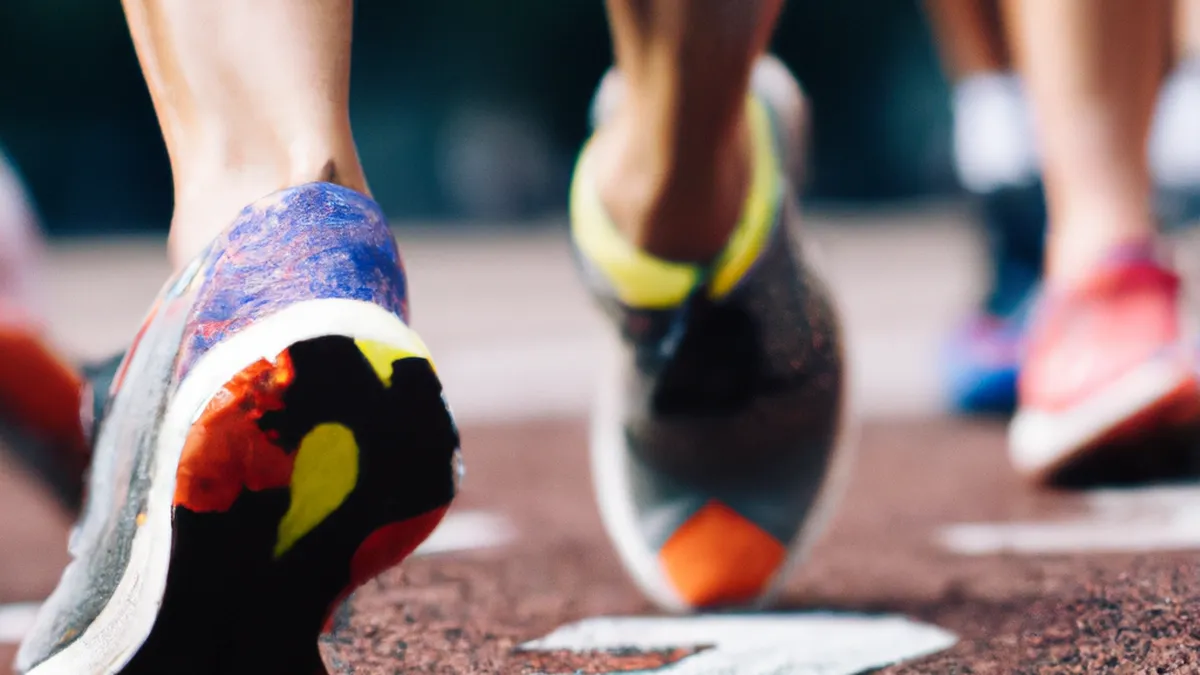
Increase Speed with Progressive Distance Training
Progressive Distance Estimation Drills: Enhance Your SkillsDistance estimation is crucial for athletes in running, cycling, and archery. Accurate estimation improves performance and boosts confidence. This blog explores drills that sharpen your skills and help you excel in your sport.
Understanding Distance Estimation
Distance estimation predicts how far away an object or target is. This skill matters in athletics and everyday situations, like navigation. Practice and awareness of your surroundings are essential. Athletes who estimate distances accurately can make better competition decisions.
Why Do Distance Estimation Drills?
Practicing these drills enhances spatial awareness. Frequent practice trains your brain for quick calculations. This skill proves valuable in high-pressure moments when measuring distances isn’t possible. Mastering distance estimation improves performance and game strategy, making athletes more competitive.
Tips for Effective Distance Estimation Drills
As an Amazon Associate I earn from qualifying purchases.
Gear tip: consider running shoes, gps running watch, and heart rate strap to support this topic.
Focus on these essential tips for effective distance estimation.
Start Small and Progress Gradually
Begin with familiar distances, like 10, 20, or 30 meters. Use a track or field to measure these distances. Estimate without tools first, then gradually increase distance length. This progressive approach builds confidence and skill without overwhelming you.
Use Landmarks for Reference
Use landmarks to visualize distances. Choose nearby objects, like trees or buildings, for gauging. Practice estimating their distances to develop an intuitive sense. Over time, estimating without precise measurements will become easier.
Incorporate Technology
Modern technology aids distance estimation practice. Use GPS watches or smartphone apps to measure distances. Track your workouts and compare your estimates to actual distances. This feedback offers valuable insights for adjusting your estimating approach.
Structured Drills to Boost Your Skills
With tips in hand, explore structured drills to reinforce learning and improve estimation skills.
The 10-Second Drill
This simple and effective drill requires a timer. Stand at a starting line and set the timer for 10 seconds. Estimate how far you can run, then sprint forward. After 10 seconds, stop and measure the distance covered. Repeat weekly, gradually trying to improve.
Conclusion
In summary, distance estimation is vital for athletic success. Implement drills and tips to enhance your skills. Practice consistently to boost confidence and performance.
Below are related products based on this post:
FAQ
What is distance estimation?
Distance estimation is the ability to predict how far away an object or target is. This skill is important not only in athletics but also in everyday situations like navigation. Practicing this skill can lead to better decision-making in competitions.
Why are distance estimation drills important?
Distance estimation drills enhance spatial awareness and train the brain for quick calculations. They are especially valuable in high-pressure situations where precise measurements may not be feasible. Mastering these drills can significantly improve an athlete’s performance and game strategy.
How can I improve my distance estimation skills?
You can improve your distance estimation skills by starting with familiar distances and gradually progressing to longer ones. Using landmarks for reference and incorporating technology, such as GPS devices, can also help you visualize and track your estimates. Regular practice is key to building confidence and accuracy.














Post Comment