Carry Light, Run Right: How to Choose the Best Running Belt for Your Essentials
Quick Summary
- Pick a belt type that matches your distance: slim belts for short runs, hydration belts or vests for long runs.
- Fit and balance matter more than pockets—test with weight and run repeats to eliminate bounce.
- Prioritize a secure phone pocket, waterproof zippers, and reflective details for safety.
Intro
Carrying everything you need without disrupting your stride is part gear choice, part technique. The right running belt keeps keys, phone, gels, and ID accessible while staying out of the way. This guide helps you choose a belt by type and features, shows practical ways to fit and test it, and gives a ready-to-use checklist so you can pack exactly what you need without weighing yourself down.
Which Type of Running Belt Is Right for You?
Slim/Minimalist Belts
Designed for short runs and race-day convenience, slim belts sit close to the body and usually hold a phone (depending on size), keys, and a credit card. They’re lightweight and low-profile, ideal for tempo runs or races when you want minimal bulk.
Zippered Waist Packs
These offer more storage than minimalist belts—multiple zipped compartments for gels, small first-aid items, and an average-sized phone. Choose a soft, stretchy pack to reduce bounce.
Hydration Belts
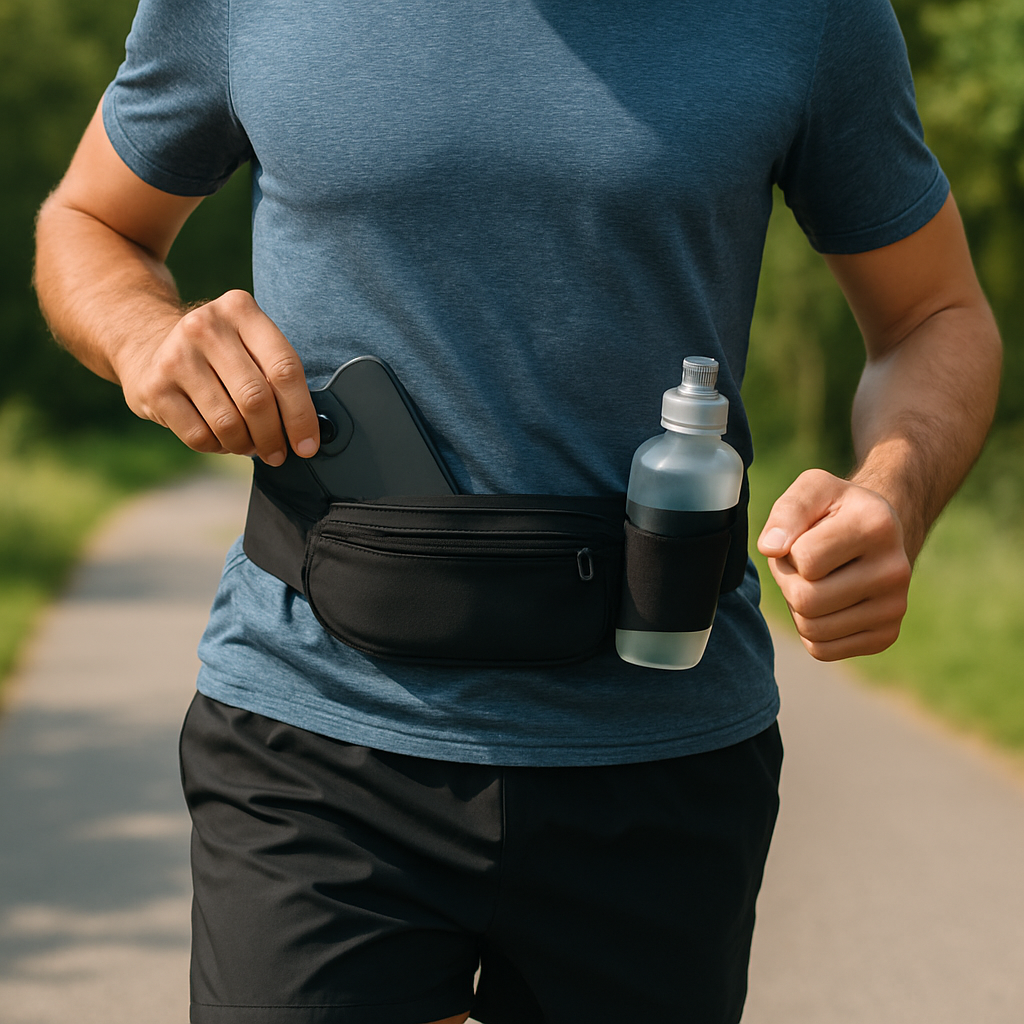
Hydration belts add bottles or small flasks to carry fluids for longer runs. Look for ergonomic bottle angles, secure bottle flasks that don’t pop out, and small pockets for essentials.
Race Belts
Race belts are lightweight with gel loops and a simple strap for a bib. They’re not built for much gear but are perfect for carrying gels and a key during shorter competitive events.
Running Vests vs. Belts
For ultra distances or trail running you may outgrow a belt and move to a vest with more storage and better weight distribution. Vests are heavier but reduce hip bounce and offer larger water capacity.
Key Features to Compare
- Fit and adjustability: Wide elastic straps and multiple adjustments reduce movement.
- Pocket layout: Separate pockets keep phone away from gels; flat pockets reduce bulk.
- Material and breathability: Moisture-wicking fabrics and soft seams improve comfort.
- Water resistance: Waterproof zippers protect electronics in rain or sweat.
- Reflectivity: Reflective strips increase visibility for early-morning or evening runs.
- Weight capacity: Check manufacturer recommendations; consider how much you really plan to carry.
How to Test and Fit a Running Belt: Practical Steps
- Adjust it to sit just above the hip bones. Too low creates bounce; too high can restrict breathing.
- Load it with what you normally carry: phone, keys, cards, a gel or two. Use the real weight rather than guessing.
- Do a short warmup followed by 4–6 strides at race pace (or target intensity). Pay attention to movement, chafing, and whether contents shift.
- If you feel bounce, reposition pockets or reduce loose space by packing items tightly or using a smaller belt.
- Test with every type of run: long slow, tempo, intervals—some belts behave differently at varying intensities.
Packing Checklist: What to Carry by Distance
Short Runs (<=5 miles / <=8 km)
- ID and cash/card
- Phone (or leave at home if safe)
- House key (or car key)
Medium Runs (5–12 miles / 8–20 km)
- Phone with route loaded
- 2–3 gels or chews
- ID, card, small bandage
- Optional small windbreaker or arm sleeves if weather changes are likely
Long Runs or Hot Races (12+ miles / 20+ km)
- Hydration (bottles or vest) and enough fuel for distance
- Phone, ID, credit card
- Mini first-aid items, sunscreen stick, lip balm
- Headlamp or reflective gear for low light
Care, Maintenance, and Safety Tips
Rinse and air-dry belts after sweaty runs. Most soft belts can be hand-washed with mild soap; check the manufacturer instructions for zippers and waterproof membranes. Replace stretchy belts once they lose elasticity or start to sag.
For safety, keep your ID and emergency contact information where it’s quickly accessible. If you’re training for races, coordinate fueling and hydration plans in training, and review recovery strategies—post-run nutrition matters for how you feel and recover (post-run nutrition tips).
Practical Steps to Reduce Bounce and Discomfort
- Distribute weight evenly around the belt—put heavier items off-center so they don’t swing.
- Tighten the belt so it’s snug but not restrictive; one-finger gap is a good rule of thumb.
- Use silicone or rubberized interior panels that grip clothing and reduce slippage.
- Wear thin, fitted layers under the belt to reduce movement and chafing.
- Practice with the belt on different routes and speeds to find the best placement.
Checklist Before You Head Out
- Is the belt adjusted snugly above your hip bones?
- Are pockets zipped and contents secure?
- Is your phone accessible but locked in place?
- Do you have your ID, cash/card, and emergency contact info?
- Hydration and fuel packed for the planned distance?
Common Mistakes Runners Make With Belts
- Overpacking: filling every pocket until the belt becomes heavy and bouncy.
- Ignoring the fit: buying a belt that looks good but isn’t adjustable enough to stay snug.
- Not testing before race day: trying a new belt for the first time during an event.
- Putting phone and gels in the same pocket: sticky screens are the result.
- Failing to secure loose straps or flaps that can rub and cause chafing.
When to Upgrade to a Vest
If you regularly run long distances, trail runs, or need more than a few hundred milliliters of fluid and multiple fuel options, consider a lightweight running vest for better weight distribution. Strength training and structured runs can also change what you carry—consult training plans that combine strength work and endurance so you know what you need for race prep (strength training for race PRs).
Conclusion
The best running belt is the one you forget you’re wearing. Choose the type that matches your typical distance, prioritize fit and pocket layout, and test the belt under running conditions before race day. With the right belt and a simple checklist, you can carry everything you need—phone, fuel, and safety items—without compromising stride or comfort.
FAQ
Q: Are running belts better than handheld bottles?
A: It depends. Belts free your hands and are better for carrying essentials beyond fluid. Handhelds can be more comfortable for runners who prefer a single bottle and don’t need pockets. For longer runs, a hydration belt or vest is often preferable.
Q: How much weight is too much for a running belt?
A: Weight tolerance varies by runner, but aim to keep belt weight under 1–2 pounds (500–900 g) for most runs. If you feel your form or cadence change, pare down the load.
Q: Will a running belt fit a large phone?
A: Many modern zippered waist packs are built to fit large phones—check dimensions before buying. If you carry a phone plus cases, measure thickness and include that in your check.
Q: Are hydration belts uncomfortable to wear for long runs?
A: Well-designed hydration belts have contoured bottles and wide, breathable straps to minimize discomfort. Test with full bottles and practice drinking on the run to find a comfortable routine.
Q: How do I clean my running belt?
A: Most soft belts are hand-washable with mild soap and should be air-dried. Remove bottles and electronics first. For belts with special membranes or coatings, follow the manufacturer’s care instructions.
For broader training and recovery context—how to prepare, recover, and manage immunity during heavy training—see related resources like race readiness and recovery tips (race-ready immunity).
Part of the Complete Strength Training Guide
Explore more: Endurance & Running Training Hub














2 comments