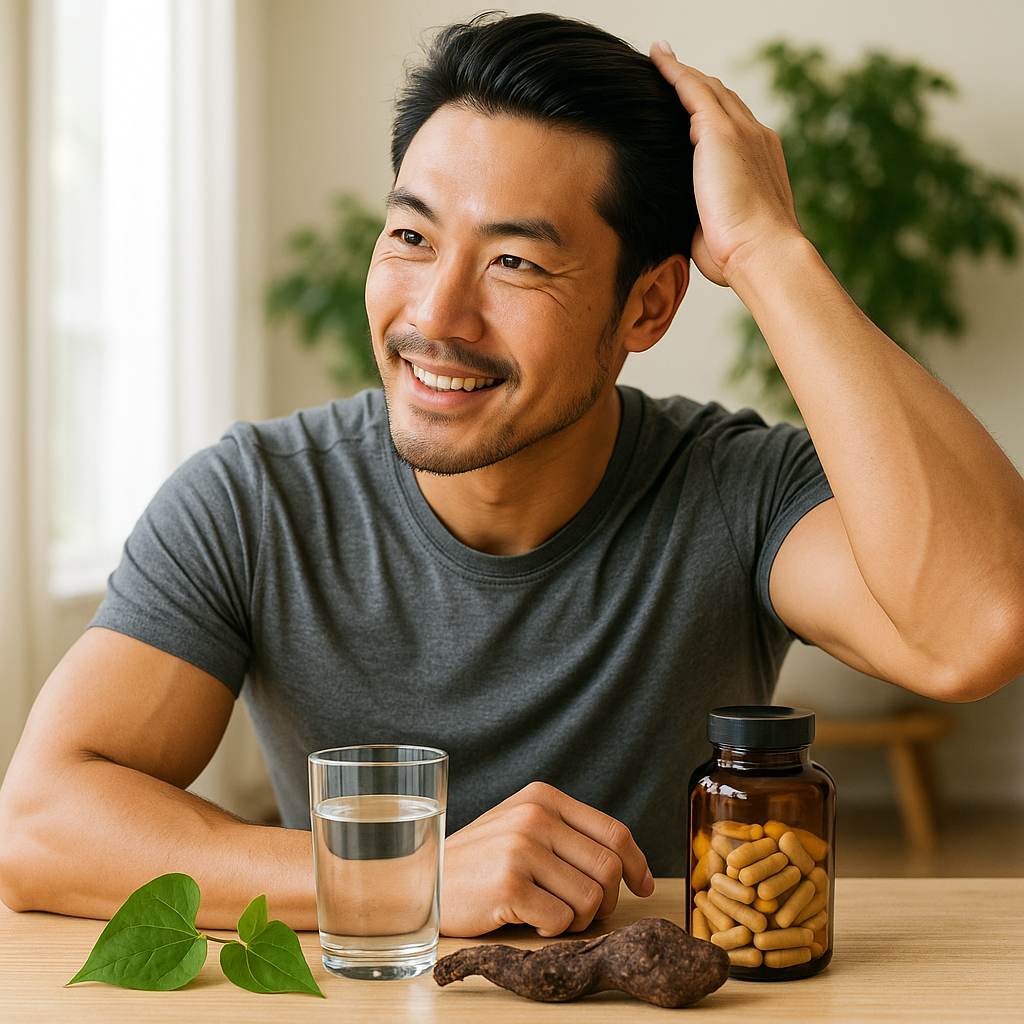
He Shou Wu (Polygonum multiflorum): Ancient Chinese Root and What Science Says About Hair Regrowth
Quick Summary
- He Shou Wu (Polygonum multiflorum), aka Fo‑Ti, is a traditional Chinese medicinal root long used for thinning hair and graying.
- Laboratory and early clinical research indicate it may work on several hair‑health pathways: reducing hormone‑driven shrinkage, protecting follicles, stimulating growth signals, and improving scalp circulation.
- Evidence in humans is promising but limited; safety concerns—particularly liver injury reported in some cases—mean caution and medical advice are essential.
- Practical use emphasizes quality sourcing, proper processing, conservative dosing, and combining with proven lifestyle measures for best results.
Hair loss affects millions and has many causes—genetics, hormones, inflammation, nutritional gaps, and scalp blood flow. A centuries‑old Chinese botanical called He Shou Wu (Polygonum multiflorum) is receiving renewed scientific attention because it appears to affect multiple of these contributors at once. Below we review what the plant is, the mechanisms researchers are studying, safety considerations, practical steps to try it responsibly, and common mistakes to avoid.
What is He Shou Wu (Polygonum multiflorum)?
He Shou Wu—often anglicized as Fo‑Ti—is the root of the perennial plant Polygonum multiflorum used in Traditional Chinese Medicine (TCM) for longevity, hair darkening, and vitality. Preparations vary: the raw root is called sheng He Shou Wu, while a processed form (steamed with black soybean or other agents) called zhi He Shou Wu is more commonly used clinically because traditional practice holds it reduces harsh side effects.
How might it help hair?
Modern research into He Shou Wu explores several biological activities that could plausibly support hair health. Most findings are from cell and animal studies; human trials are small or preliminary.
1. Hormone modulation (DHT and 5α‑reductase)
Androgenetic hair loss is driven in part by dihydrotestosterone (DHT) acting on susceptible hair follicles. Laboratory studies suggest compounds in Polygonum multiflorum may inhibit 5α‑reductase—the enzyme that converts testosterone to DHT—potentially lowering the hormone’s follicle‑shrinkage effects. Human evidence confirming clinically meaningful DHT reduction is limited.
2. Antioxidant and anti‑inflammatory effects
Active constituents such as polyphenols and anthraquinones have antioxidant properties in lab studies, which can protect dermal papilla cells (the follicle’s growth hub) from oxidative stress and inflammatory damage that contribute to hair thinning.
3. Activating growth signals (Wnt/β‑catenin and growth factors)
Preclinical work indicates He Shou Wu extracts may upregulate molecular pathways involved in follicle cycling—like the Wnt/β‑catenin pathway—and increase expression of growth factors that promote the anagen (growth) phase of hair.
4. Improved scalp circulation
Some studies report enhanced microcirculation and increased vascular endothelial growth factor (VEGF) activity with extract application, theoretically improving nutrient and oxygen delivery to follicles.
What the clinical evidence shows
Randomized, large‑scale human trials are scarce. Small clinical studies and case reports suggest potential benefits for hair density and pigmentation, but results vary and study designs often lack rigorous controls. Because most human data are preliminary, He Shou Wu should be considered an experimental complementary option rather than a proven standard therapy. If you’re already following evidence‑based approaches for hair loss (nutrition, stress management, or clinician‑recommended topical/oral treatments), He Shou Wu may be considered as an adjunct after discussing it with a healthcare professional.
Safety and known risks
Although traditionally used for centuries, modern case reports have linked He Shou Wu—especially unprocessed or high doses—to liver injury in some individuals. Reports vary from mild enzyme elevations to more serious hepatitis. Other concerns include interactions with medications and variability in product purity and formulation.
Key safety points:
- Do not assume “natural” equals safe; some herbal compounds can stress the liver or interact with drugs.
- Pregnant or breastfeeding people, those with known liver disease, or people on medications metabolized by the liver should avoid it unless cleared by a clinician.
- Processed (zhi) forms are traditionally considered gentler than raw (sheng); product quality matters.
Practical steps for trying He Shou Wu safely
If you’re interested in trying Polygonum multiflorum for hair support, follow these steps:
- Talk to your primary care provider or a dermatologist, especially if you have liver disease, take prescription meds, or are pregnant/breastfeeding.
- Choose reputable products—prefer standardized extracts from manufacturers with third‑party testing for contaminants and potency.
- Prefer processed (zhi) formulations if following traditional guidance; read product descriptions or ask the supplier.
- Start low and monitor: begin with a conservative dose for a short trial period; stop and seek care if you develop jaundice, dark urine, nausea, abdominal pain, itching, or unexplained fatigue.
- Consider topical formulations first if you are nervous about systemic exposure; do a patch test for skin sensitivity.
- Combine supplementation with proven lifestyle supports: balanced nutrition, stress management, adequate sleep, and smoking cessation. Diets rich in whole foods—like the Mediterranean or Nordic patterns—support overall health and may indirectly help hair (see more on healthy eating approaches here and here).
Monitoring checklist
- [ ] Discuss use with a clinician before starting
- [ ] Obtain a product with third‑party testing and clear ingredient list
- [ ] Choose processed (zhi) form or topical formulation if available
- [ ] Start at a low dose and keep a symptom diary
- [ ] Consider baseline and follow‑up liver function tests if taking orally for more than a few weeks
- [ ] Stop immediately for signs of liver trouble (jaundice, dark urine, severe fatigue)
Common Mistakes
- Assuming all He Shou Wu products are the same—potency, processing, and contaminant levels vary widely.
- Using raw/unprocessed root without guidance; this may raise risk of adverse effects.
- Relying on one supplement instead of addressing diet, sleep, stress, and medical causes of hair loss.
- Skipping medical advice if you have liver disease or take medications metabolized by the liver.
- Expecting rapid results—most interventions for hair require months to show measurable change.
How to integrate He Shou Wu into a broader hair‑health plan
Think of He Shou Wu as a potential piece of a larger puzzle. Address reversible causes first—nutritional deficiencies, thyroid or hormonal imbalances, scalp conditions, and lifestyle factors. Evidence‑based supportive strategies include maintaining a nutrient‑dense diet, managing stress, avoiding smoking, and following hair care practices that minimize mechanical damage. For nutritional patterns that benefit overall health (which supports hair too), see lifestyle resources such as this discussion of Mediterranean diet benefits here.
Conclusion
He Shou Wu (Polygonum multiflorum) is an intriguing botanical with traditional use for hair darkening and regrowth and a growing body of laboratory research suggesting multiple mechanisms that could support follicles. However, human clinical evidence remains limited and safety concerns—particularly liver injury in some reports—require caution. If you consider trying it, do so under medical supervision, prioritize quality products, and integrate it into a comprehensive approach that includes diet, stress management, and evidence‑based treatments where appropriate.
FAQ
- 1. What is He Shou Wu and how is it used?
- He Shou Wu (Polygonum multiflorum) is a root used in Traditional Chinese Medicine for hair, vitality, and aging. It is available as raw or processed root, powders, capsules, and topical extracts. Processing (zhi) is traditionally used to reduce harsh effects.
- 2. Can He Shou Wu regrow hair or reverse gray hair?
- Traditional claims say yes, and preclinical studies show biological effects that could support hair growth or pigmentation. However, high‑quality human trials are limited. Results, when they occur, are often gradual and vary between individuals.
- 3. Is He Shou Wu safe?
- While many people tolerate it, there are reported cases of liver injury associated with its use. People with liver disease, pregnant or breastfeeding individuals, and those on certain medications should avoid it unless cleared by a clinician. Monitor for symptoms like jaundice or severe fatigue and stop use if they appear.
- 4. How long until I might see results?
- Hair growth cycles are slow; if He Shou Wu has an effect, visible changes would typically take months (often 3–6 months) rather than weeks. Lack of improvement in several months should prompt a reassessment with a healthcare provider.
- 5. Can I use He Shou Wu with conventional hair treatments like minoxidil or finasteride?
- There is limited research on interactions. Because He Shou Wu can affect liver metabolism and possibly hormone pathways, discuss combining it with prescription treatments with your dermatologist or prescribing clinician before starting.
Part of the Complete Strength Training Guide
Explore more: Complete Strength Training Guide














Post Comment