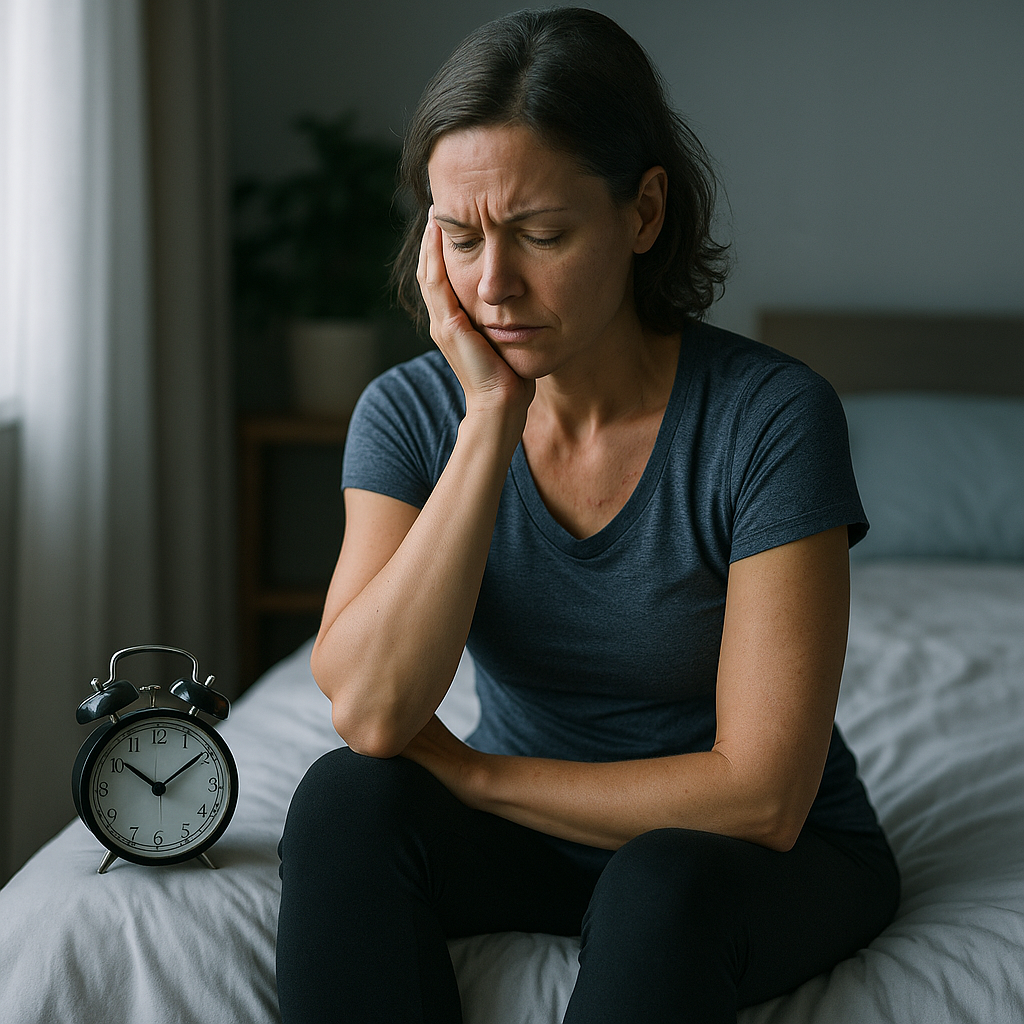
When Cancer Upsets the Body Clock: Why Tumors Can Trigger Anxiety and Sleeplessness
Recent animal research suggests some tumors can quickly scramble the brain’s timing signals, with knock-on effects for stress hormones, sleep, immunity and mood. Below we summarize the findings, explain what they might mean for people, and offer practical steps to protect your circadian rhythm.
Quick Summary
- Mouse studies show that developing tumors can flatten the normal day–night rhythm of stress hormones and disrupt brain–body feedback loops that regulate sleep, stress and immune activity.
- In those experiments, restoring normal day–night signaling in specific brain neurons reset stress hormone rhythms, boosted immune cells entering tumors, and reduced tumor size—without anticancer drugs—but this was in animals, not humans.
- Disrupted circadian rhythms are linked to sleep problems, increased anxiety, and broader health risks; maintaining daily timing cues (light, activity, meals, sleep) can help support your internal clock.
Introduction
Scientists have long known that our bodies run on a roughly 24-hour schedule set by the brain’s master clock and reinforced by light, activity, meals and social routines. New animal experiments add a surprising twist: tumors themselves may hijack that timing system early on, flattening the normal daily swings in stress hormones and changing how the brain and body talk to each other. Those changes can affect sleep, anxiety and immune responses—potentially influencing how the body responds to cancer.
What the new research found
In controlled lab studies using mice, researchers observed that when breast tumors began to form, the animals’ daily rhythm of stress hormones (mice use corticosterone; humans use cortisol) became blunted. That flattened rhythm interfered with the usual feedback loops between the brain and immune system. Remarkably, when the researchers restored normal day–night signaling in certain neurons, the stress hormone cycles returned, immune cells flooded the tumors, and the tumors shrank—without chemotherapy or other drugs.
Important caveat: these results are from animal models. Translating findings from mice to humans takes time and careful clinical study. Still, the work highlights a biological pathway—circadian regulation of stress hormones and immunity—that deserves attention because it can affect symptoms people with cancer often experience, like insomnia and anxiety.
How cancer might affect your brain, sleep, and mood
Stress hormones and sleep
Stress hormones normally peak and fall in a predictable daily pattern that helps you feel alert in the day and sleepy at night. If that rhythm is flattened—whether by illness, chronic stress, shift work or, possibly, tumors—people can experience trouble falling asleep, fragmented sleep, early waking, or daytime fatigue.
Immune system timing
The immune system also follows circadian rhythms. Immune cells migrate, respond to signals, and carry out repairs at different times of day. Disrupting those rhythms can change how immune cells patrol tissues and how they respond to threats, which may influence inflammation and the body’s ability to attack tumor cells.
Mood and anxiety
Sleep and circadian disruption are strongly linked to mood symptoms. Insomnia and irregular sleep tend to increase anxiety and can worsen concentration and emotional resilience. If a tumor-driven change in brain signaling contributes to sleep disruption, it may indirectly worsen anxiety and stress reactions.
Why this matters for people
Even if the tumor–clock connection needs more human research, the findings reinforce a broader truth: strong daily timing cues support sleep, stress regulation and immune health. Poorly timed sleep, irregular activity, and exposure to bright light at night have been associated with higher risks for metabolic problems and cognitive decline. For an overview of how a disrupted body clock can affect the brain long-term, see this summary on circadian disruption and dementia risk.
Practical steps to support your circadian rhythm
Whether or not cancer is a factor, you can protect and strengthen your internal clock with consistent daily habits. Below are evidence-aligned strategies that support sleep, stress management, and immune health.
Daily actions
- Keep a consistent sleep–wake schedule, even on weekends—wake time is especially important.
- Get bright natural light in the morning for 20–30 minutes if possible; sunlight is the strongest cue for the master clock.
- Schedule exercise earlier in the day or afternoon rather than right before bedtime; daytime movement also reinforces circadian timing (using a low-profile option like an under-desk walking pad can increase daytime activity if your schedule is sedentary).
- Time meals regularly and avoid large late-night dinners; consistent meal timing helps align peripheral clocks in the body.
- Limit caffeine and alcohol in the evening; both can fragment sleep and blunt the nighttime drop in arousal.
- Create a dark, cool, comfortable bedroom and dim lights in the 1–2 hours before bed; reduce screen exposure or use night modes to lower blue light.
- Practice brief relaxation before bed—deep breathing, progressive muscle relaxation, or a short mindful routine—to lower pre-sleep arousal.
Medical and psychosocial steps
- If you have cancer or are undergoing treatment, talk with your oncology team about sleep and mood symptoms—treatment plans can affect hormones and sleep, and your team can help coordinate care.
- Discuss persistent insomnia or anxiety with a clinician; cognitive behavioral therapy for insomnia (CBT-I) and evidence-based therapies for anxiety are effective non-drug options.
- If medications are being considered for sleep or anxiety, those decisions should be individualized and supervised by a healthcare professional.
Checklist: Daily circadian-support routine
- [ ] Wake at the same time every day
- [ ] 20–30 minutes of morning light or outdoor time
- [ ] Move during the day (walks, exercise, or light activity)
- [ ] Eat at consistent times; avoid late heavy meals
- [ ] Dim lights and limit screens 1–2 hours before bed
- [ ] Wind down with relaxation before sleep
- [ ] Talk to your care team about persistent sleep or mood changes
Common Mistakes
- Assuming animal findings apply directly to people without clinical evidence—mouse studies generate hypotheses, not treatment plans.
- Relying on sleeping pills as a first-line solution for long-term circadian problems rather than addressing timing and behavior.
- Ignoring daytime routine—sleep timing is only one part; light, activity and meals matter too.
- Using devices with bright screens right before bed, which delays melatonin release and sleep onset.
- Failing to discuss sleep or anxiety with clinicians, especially if you have cancer or are on treatments that affect hormones.
Conclusion
New animal research suggests tumors can perturb the brain’s timing networks and downstream stress hormone rhythms, with consequences for sleep, mood and immune activity. While these findings are preliminary and from mice, they underscore the importance of protecting and strengthening circadian cues—regular sleep times, daylight exposure, daytime activity and consistent meals. If you or a loved one are experiencing significant sleep problems or anxiety, especially during illness or cancer treatment, consult your healthcare team to explore tailored, evidence-based options.
FAQ
Q: Does this mean cancer directly causes insomnia in people?
A: The animal studies show tumors can alter timing signals in mice, but human biology is more complex. Cancer and cancer treatments, as well as the stress of a cancer diagnosis, can contribute to insomnia. If you have persistent sleep problems, speak with your medical team.
Q: Can improving my sleep make my immune system fight cancer better?
A: Good sleep supports immune function broadly, which is beneficial for overall health. The mouse work raises intriguing possibilities, but we don’t yet have direct evidence that improving sleep will shrink tumors in people. Still, supporting sleep is a low-risk way to improve quality of life and resilience.
Q: Should cancer patients try light therapy or melatonin to reset their clocks?
A: Light therapy, melatonin and other interventions can help with circadian rhythm problems in some cases, but they should be used under medical guidance—especially if you are on cancer treatments, which can interact with other therapies.
Q: Are there long-term risks of a disrupted body clock?
A: Chronic circadian disruption has been linked in studies to higher risks of metabolic disease, cognitive decline and mood disorders. For a deeper look at links between body‑clock disruption and brain health, see this overview on disrupted body clocks and dementia risk.
Q: What’s one practical change I can make today?
A: Start with a consistent wake time and get 20–30 minutes of morning light. Combining that with daytime activity—if needed, something approachable like adding movement opportunities during work hours or using an under‑desk walking option—can quickly strengthen your daily rhythm.
Part of the Complete Strength Training Guide
Explore more: Recovery, Mobility & Injury Prevention














Post Comment